
Rethinking the Small Kitchen
Oakmont Kitchens & Interiors, Johannesburg
When thinking of small kitchen design ideas in Johannesburg that homeowners can rely on, the goal is never to make a space feel smaller — it is to make it feel intentional. In a city where apartments, townhouses and compact living are increasingly common, intelligent layout, material selection and storage planning become the architecture of comfort. A well-designed small kitchen does not compromise; it refines.
International design publications such as Dwellconsistently highlight that compact kitchens benefit most from restraint, clarity, and strong spatial logic rather than decorative excess
Design-led joinery treats space as something to be organised, not disguised — allowing the kitchen to feel settled and purposeful within its architecture.
Layout First: Let the Space Lead the Design
In small kitchens, layout decisions carry more weight than finishes. Circulation, clearance, and proportion must feel intuitive, otherwise the space quickly becomes restrictive.
Layouts that work particularly well
-
Galley kitchens that prioritise linear efficiency
-
Single-wall kitchens for open-plan apartments
-
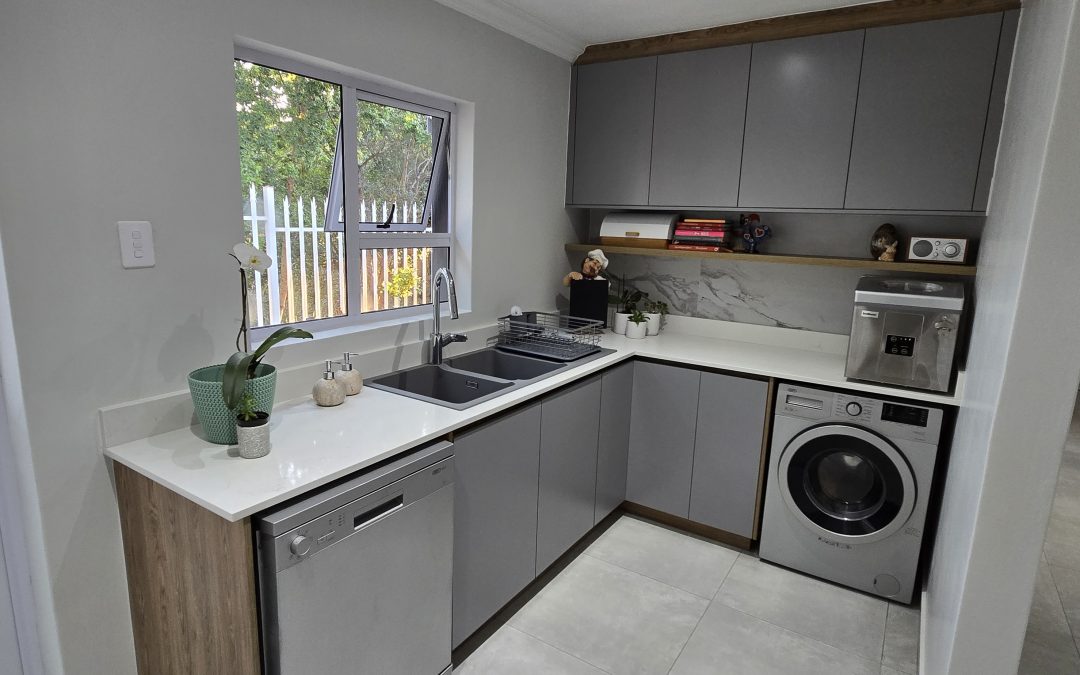
L-shaped layouts that optimise corners
-
Compact island kitchens where movement paths are carefully resolved
These principles are central to thoughtful kitchen design Johannesburg, where spatial planning often determines how the entire home functions.
Handle-Less Cabinetry to Reduce Visual Noise
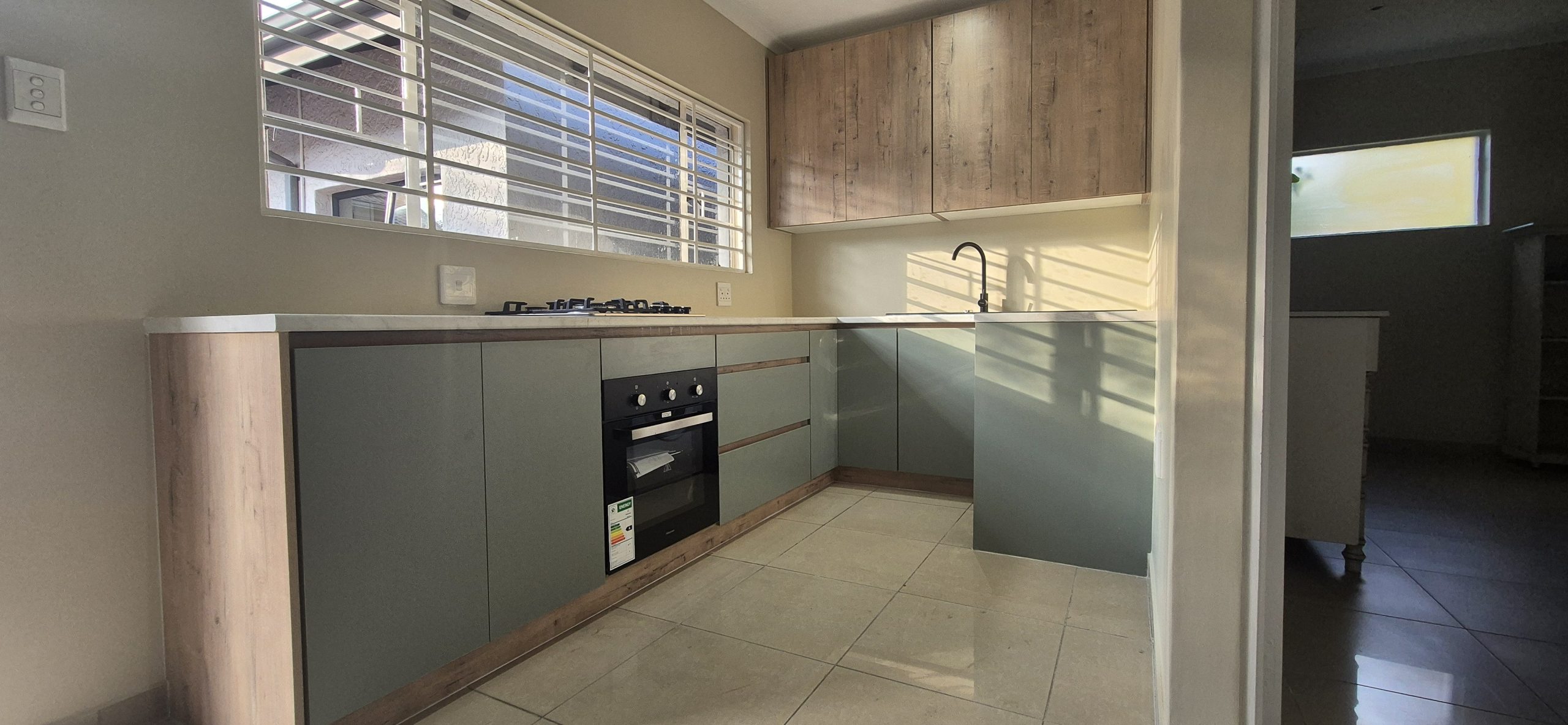
Visual interruption is one of the quickest ways to make a small kitchen design in Johannesburg feel busy. Handles, trims, and unnecessary detailing fragment surfaces and break continuity.
Handle-less cabinetry allows the kitchen to read as a single architectural element rather than a collection of parts.
Why handle-less works so well in compact spaces
-
Continuous horizontal and vertical lines
-
Fewer visual breaks
-
Easier integration into open-plan living
-
A calmer overall presence
This approach is widely used in handle-less kitchen designs, especially in homes where the kitchen is visible from living and dining spaces.
Storage That Works Hard Without Looking Busy
Small kitchens don’t need more cupboards — they need smarter ones.
Design-led storage solutions focus on access, visibility, and efficiency rather than volume.
Effective storage strategies
-
Deep drawers instead of lower cupboards
-
Vertical cabinetry taken to ceiling height
-
Slim pull-out units for spices and oils
-
Integrated pantry drawers
-
Hidden storage within islands
These strategies are supported by modern hardware systems from manufacturers such as Blum and Grass, whose drawer runners and pull-out mechanisms are designed specifically for compact, high-use spaces.
They also align naturally with contemporary kitchen cabinet design, where function is shaped quietly into the joinery.
Light as a Design Tool
In compact kitchens, light performs an architectural role. It defines depth, softens materials, and expands the perceived boundaries of the room.
Design publications like Dezeenoften note that layered lighting — rather than a single overhead source — is essential in small interior spaces
Lighting strategies that work
-
Under-cabinet LED lighting to remove shadow
-
Warm, indirect light to soften hard edges
-
Integrated lighting within open shelving
-
Minimal reliance on harsh overhead fittings
When light is considered early in the design process, even small kitchens feel composed and deliberate.
Material Restraint Creates Calm
Material overload is one of the most common mistakes in small kitchens. Too many textures or colours fragment the space visually.
Design-led kitchens favour:
-
Soft matt finishes
-
Subtle wood-grain textures
-
Tonal colour palettes
-
Minimal contrast between cabinetry and walls
This restrained approach is frequently seen in imported premium kitchens, where proportion and surface continuity are prioritised over ornamentation.
Integrated Appliances for Seamless Living
Small kitchens often sit within open-plan living areas, making appliance integration essential.
Common integration strategies
-
Built-in fridge and freezer units
-
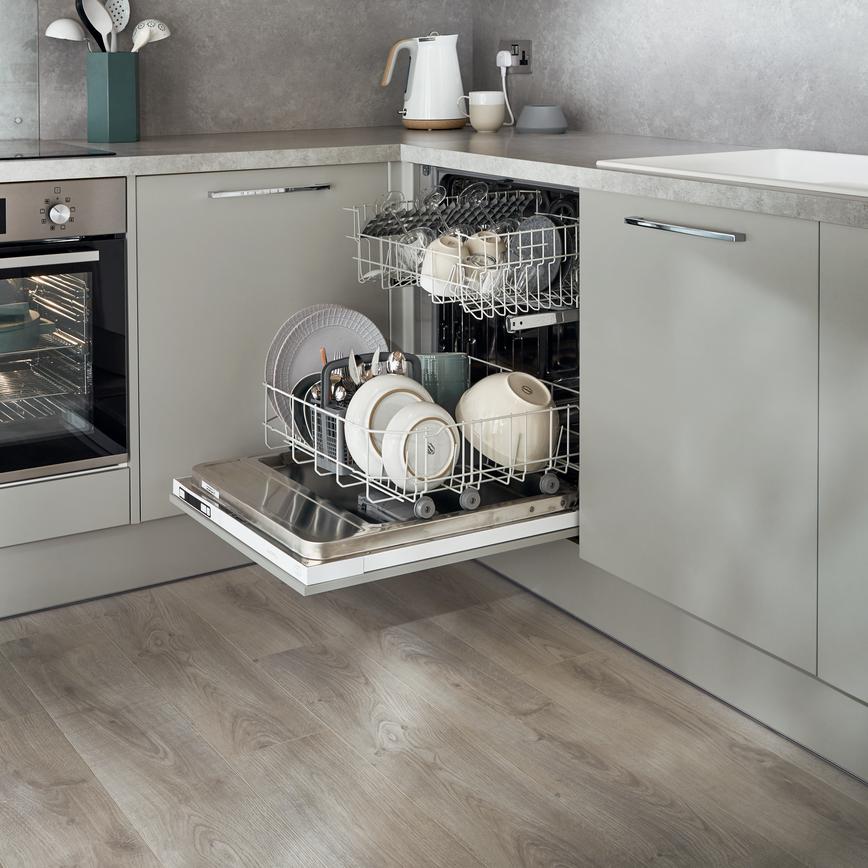
Concealed dishwashers
-
Appliance garages for kettles and coffee machines
-
Flush-mounted ovens and microwaves
By reducing visual clutter, integrated appliances help the kitchen feel like part of the home rather than a purely functional zone.
Why Small Kitchens Often Feel More Considered
Interestingly, compact kitchens often feel more resolved than large ones. With fewer opportunities to over-design, each decision tends to be deliberate.
Small kitchens frequently offer:
-
Shorter movement paths
-
Greater efficiency
-
Easier maintenance
-
A stronger sense of order
When designed thoughtfully, they support daily life quietly and intuitively.
Final Thought
A small kitchen in Johannesburg does not need to be louder or more complex to succeed. When layout, storage, materials, and light are shaped with intention, compact spaces can feel calm, generous, and deeply considered.
Design-led joinery allows small kitchens to work honestly within their limits — and in doing so, often reveals a quieter, more refined kind of luxury.
Frequently Asked Questions About Small Kitchen Design
What is the best layout for a small kitchen in Johannesburg?
The most effective layouts for small kitchens in Johannesburg are typically L-shaped or galley configurations, as they maximise movement efficiency while preserving usable counter space.
How can I make a small kitchen feel bigger?
Light finishes, integrated storage, handle-less cabinetry and consistent flooring all contribute to visual openness. Strategic lighting and minimal upper cabinetry can further reduce visual weight.
Are custom cabinets worth it for small kitchens?
In compact spaces, precision matters. Custom cabinetry allows every millimetre to serve a purpose — especially in corner units, vertical storage and appliance integration.