
Soft Technology: How Modern Hardware Shapes Today’s Kitchen Experience
Oakmont Kitchens & Interiors, Johannesburg
In today’s kitchens, luxury isn’t loud.
It’s not the finishes that shimmer or the surfaces that compete for attention.
Instead, luxury reveals itself through movement or premium kitchen hardware — quiet, effortless, and deeply considered.
Hardware has become one of the most influential elements in modern kitchen design, guiding how a space feels as much as how it functions.
This shift matters deeply for Johannesburg homeowners, architects, and designers.
As kitchens move toward cleaner façades and warmer minimalism, hardware becomes the hidden architecture beneath every gesture.
Why Hardware Matters More Than Ever
A kitchen’s quality is often judged not by what you immediately see, but by what you feel — the glide of a drawer, the subtle resistance of a hinge, the silence that follows a soft-close motion.
Global design editorials continue to emphasise this invisible layer of luxury.
Publications like Dwelland Dezeen frequently highlight joinery that feels intuitive, unobtrusive, and almost impossibly refined.
For South African homes, where open-plan living remains dominant, this quietness is essential. A kitchen should move with a calm, deliberate rhythm — especially in high-use environments where function meets architectural beauty.
This idea aligns closely with kitchen design in Johannesburg, where sophisticated detailing is now considered a core design principle.
Precision You Can Feel: The Engineering Behind Soft Technology
Hardware brands such as Blumand Grasshave defined modern expectations for movement.
Their systems do far more than open and close cabinetry — they orchestrate how a kitchen behaves throughout the day.
Blum’s approach to motion
Blum’s engineering focuses on refined movement:
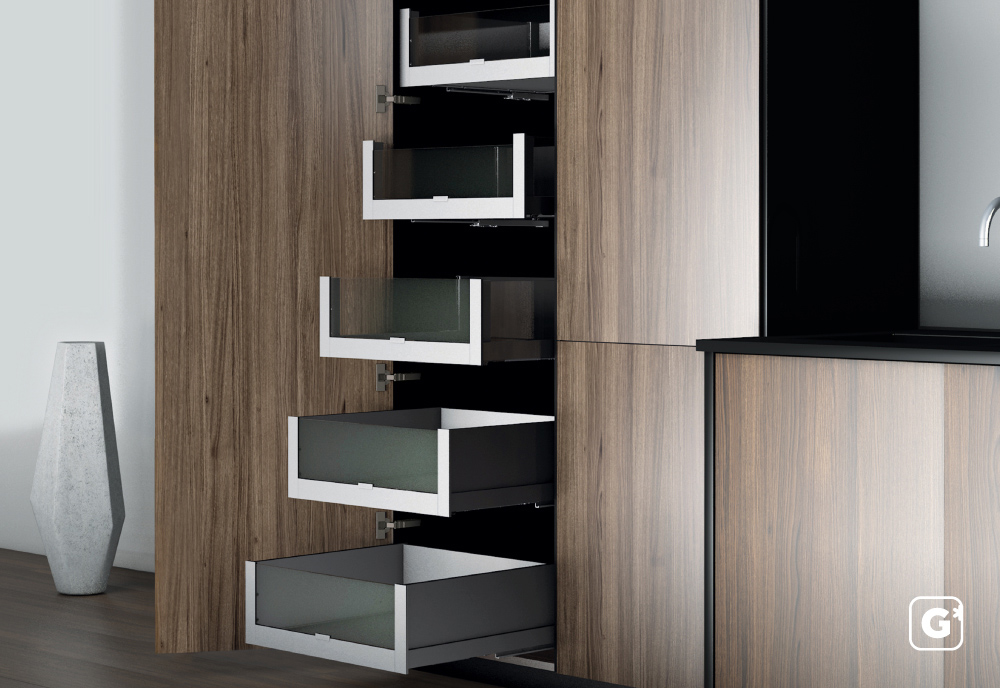
- soft-close behaviour that feels controlled, not abrupt
- runners capable of carrying heavy loads without losing glide
- push-to-open mechanisms that remove visual clutter
- hinges designed to disappear into the cabinetry
Grass and the evolution of drawer systems
Grass prioritises strength and precision.
Their runners and drawer systems carry a certain architectural intelligence — engineered for stability, accuracy, and continuous use.
This level of engineering is especially valuable in built-in kitchen cupboards in Johannesburg, where longevity and performance are expected, not optional.
Soft Technology: Hardware That Disappears Into the Design
Technology in modern kitchens has matured from being a feature on display to something quietly integrated behind the scenes.
Hardware manufacturers like Blumand Grasshave pushed this evolution, refining drawer runners and hinge systems until they become almost invisible in daily use.
Key movement trends include:
- soft-close systems engineered for silence
- push-to-open cabinetry integrated into clean façades
- internal organisation that adapts to how households truly move
- runners that glide effortlessly under full load
These innovations are increasingly important in built-in kitchen cupboards in Johannesburg, where refined motion enhances the experience of daily living.
The Beauty of Discretion: Hardware That Disappears
Modern hardware is designed to be felt more than seen.
As kitchen façades become cleaner and more minimal, hardware is shifting inward — creating a seamless exterior while enhancing the user experience from within.
Trends influencing Johannesburg homes include:
- handle-less cabinetry supported by internal push systems
- concealed hinges that maintain visual purity
- slim drawer profiles with high structural rigidity
- integrated organisation that adapts to daily rhythms
This aesthetic direction supports imported premium kitchens, where craftsmanship and engineering work in quiet partnership.
Organisation as a Design Language
Hardware is no longer purely mechanical — it shapes how people interact with space.
Internal organisation systems from brands like Häfele reimagine storage not as a box or a shelf, but as a choreography of access and flow.
Designers increasingly prioritise:
- internal lighting that activates with movement
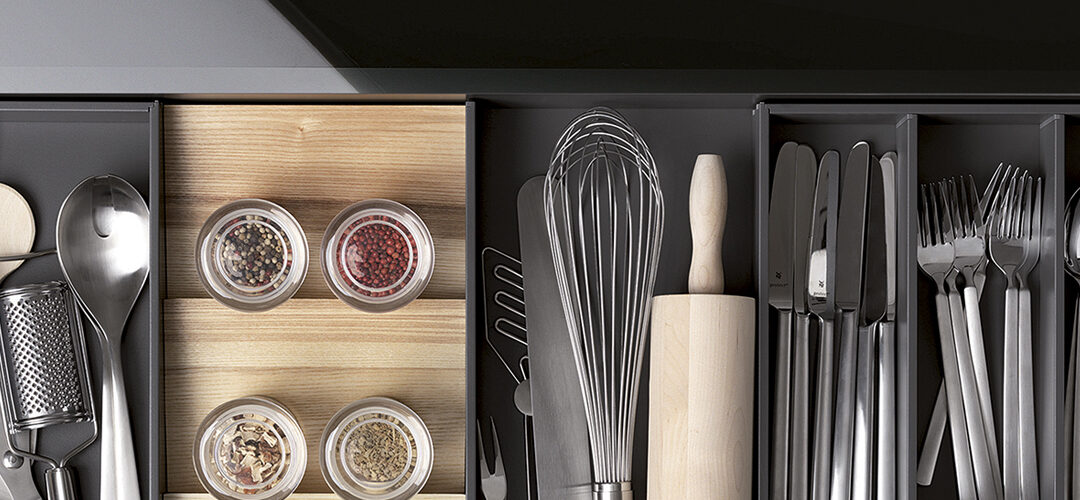
- adjustable systems for cutlery, spice, or utensil zones
- deep pan drawers replacing traditional cabinet doors
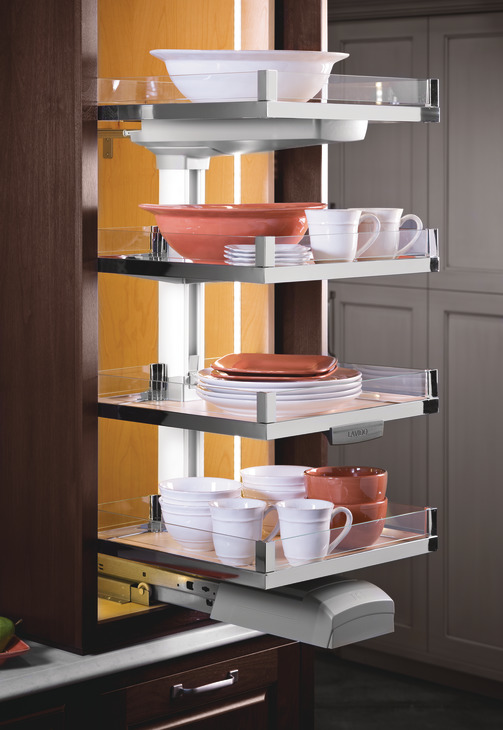
- internal pull-outs for corner or pantry spaces
These concepts work particularly well in cupboard design throughout Johannesburg, where efficiency and elegance form a single conversation.
Soft Technology in Open-Plan Living
In many modern homes, the kitchen is visible from almost every communal space.
Movement needs to be quiet, controlled, and almost imperceptible — supporting the calm visual composition of the room.
This is where soft technology becomes essential:
- silent drawers maintain the tranquillity of open spaces
- integrated runners reduce vibration on countertops
- soft-close systems prevent abrupt sounds
- concealed hardware reduces visual noise
For designers working on kitchen cabinets in Johannesburg, these details define the overall atmosphere of the home.
A Kitchen That Responds to You
The true elegance of soft technology lies in how naturally it supports daily rituals.
A drawer that glides with the weight of a single hand.
A door that slows itself without instruction.
An internal system that adapts to the objects a household keeps close.
These are not features.
They are gestures — subtle forms of design intelligence that elevate the everyday.
And as Johannesburg homeowners increasingly seek kitchens that feel intentional and enduring, this quiet engineering becomes one of the most persuasive expressions of quality.
Final Thought