
Oakmont Kitchens & Interiors, Johannesburg
In contemporary homes, built-in TV wall units have become more than a functional requirement. It is increasingly treated as an architectural element within the living space, where cabinetry, materials and proportions are carefully considered to create a balanced composition.
Rather than introducing standalone furniture, many homeowners are opting for built-in TV units and entertainment walls that integrate seamlessly with the surrounding interior. This approach allows the television to sit within a broader design language rather than dominating the space.
Design publications such as Dezeen frequently highlight how modern interiors use joinery and material contrast to transform television walls into considered design features.
In many projects, these installations form part of a larger joinery strategy where cabinetry continues across different areas of the home.
For example, many luxury kitchens in Bryanston are designed alongside living spaces, allowing materials and finishes to carry through into entertainment walls and adjacent cabinetry.
Floating TV Units
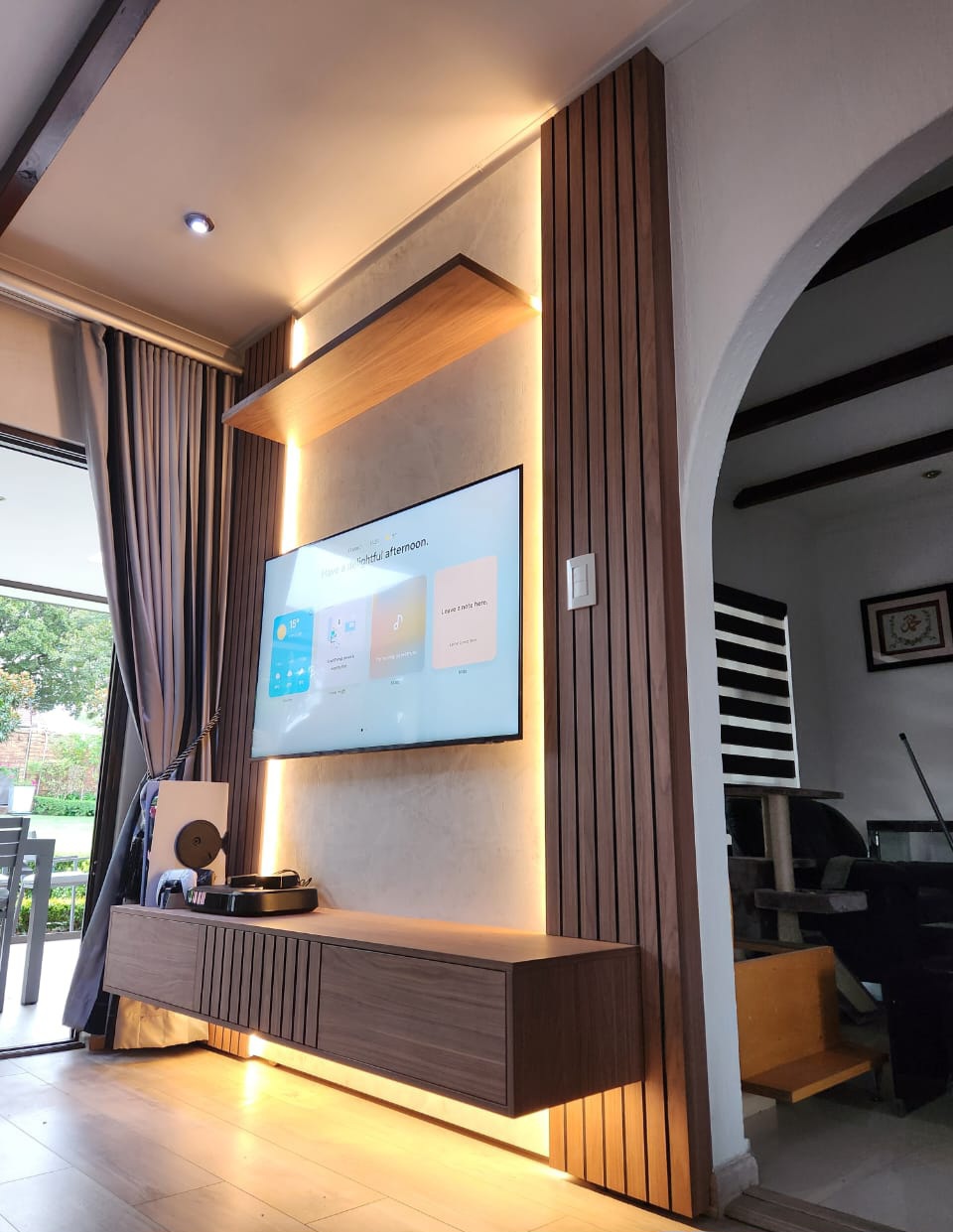
Floating TV units have become a defining feature of contemporary entertainment wall design. By lifting cabinetry off the floor, the installation appears lighter and more architectural within the space.
This approach also allows for integrated lighting beneath the cabinetry, creating a subtle visual effect that enhances the overall composition of the room.
Floating units are particularly effective in open-plan interiors where maintaining visual flow is essential.
Design platforms such as Dwell often showcase floating cabinetry as a way to balance functionality with minimal design.
Full Feature Wall Installations
Full-height entertainment walls transform the television into part of a larger architectural feature. These installations typically extend from floor to ceiling, incorporating shelving, storage and panel detailing.
Rather than isolating the television, the entire wall becomes a focal point within the room.
This approach works particularly well in homes where living areas are designed as central gathering spaces.
Similar design principles are often applied when creating built-in cupboards in Johannesburg, where cabinetry is tailored to the proportions of the room and integrated into the surrounding architecture.
Mixed Material TV Walls
Combining materials such as timber, stone and glass introduces depth and texture to entertainment walls.
Timber grain finishes can bring warmth to the space, while stone surfaces or cladding create contrast and visual weight around the television.
The balance between materials is what defines the success of these installations. When executed correctly, the television wall becomes part of the overall material palette of the home.
Many designers reference decorative boards from suppliers such as PG Bison when selecting finishes for these types of installations.
Minimalist Panel Designs
In more minimal interiors, television walls are often simplified into clean panel installations.
Rather than incorporating extensive shelving or visible storage, the focus is placed on proportion, alignment and subtle detailing.
The television is integrated into flat panels, allowing the wall to remain visually quiet while still functioning as a focal point within the space.
This approach is particularly suited to modern homes where restraint and simplicity define the overall aesthetic.
Storage-Focused Entertainment Walls
Beyond aesthetics, entertainment walls also serve a practical purpose.
Well-designed installations incorporate concealed storage for media equipment, allowing devices such as routers, gaming consoles and sound systems to be hidden behind cabinetry fronts.
This ensures that the living space remains uncluttered while still accommodating modern technology.
These principles are often carried through into other areas of the home, such as kitchen cupboards in Johannesburg, where storage is designed to be both functional and visually integrated.
A Contemporary Oakmont Installation
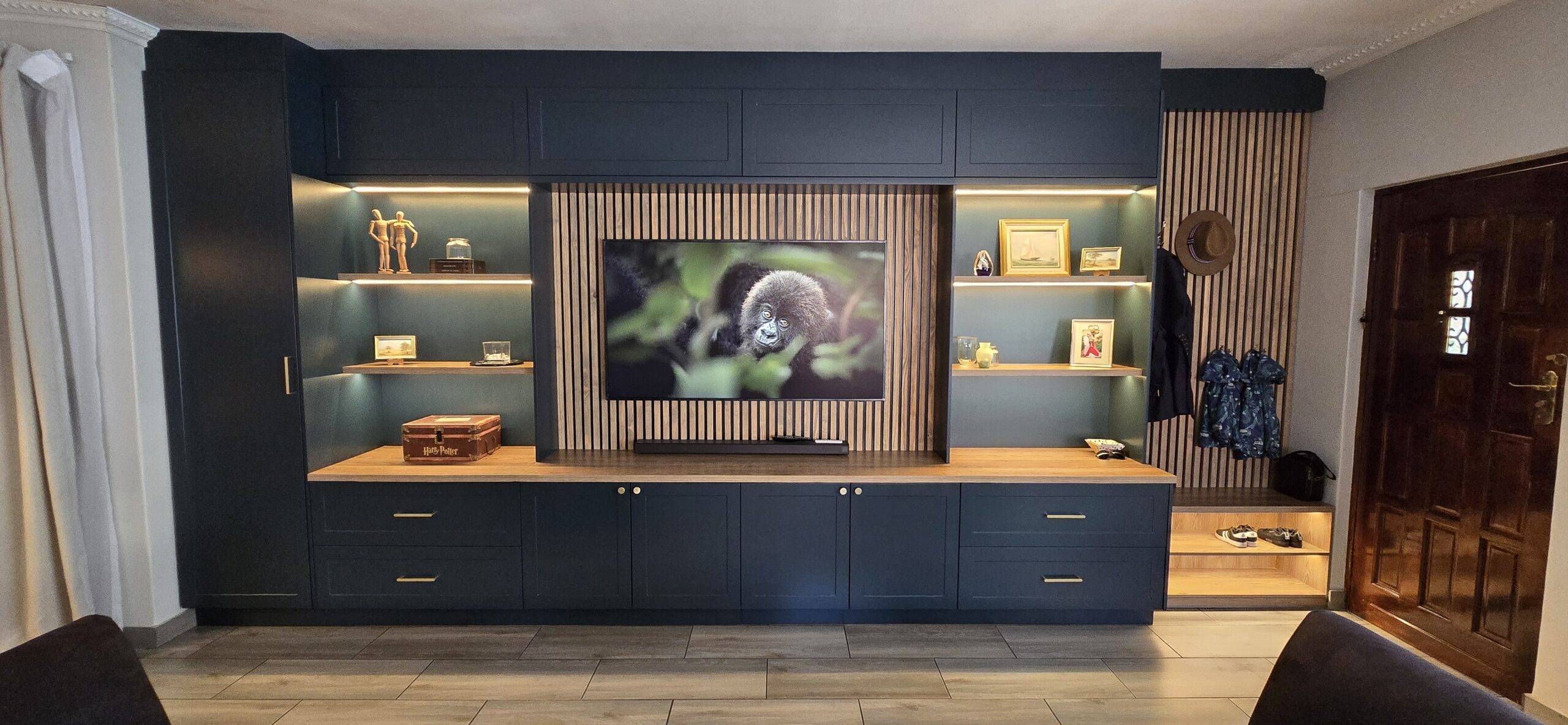
In a recent project, a custom entertainment wall was designed using a combination of warm materials and integrated lighting to create a balanced focal point within the living space.
The installation combined fluted timber elements, melamine surfaces and concealed storage, allowing the television to sit naturally within the composition rather than appearing as a separate element.
Lighting was carefully incorporated to highlight textures and create depth, particularly in the evening when the space transitions into a more ambient setting.
This approach reflects a broader design philosophy where joinery is treated as part of the architecture of the home rather than as standalone furniture.
For homeowners exploring similar solutions, TV units and entertainment walls in Johannesburg are increasingly designed as bespoke installations tailored to the proportions and layout of each space.
Internal link > TV Units & Entertainment Walls Johannesburg
Final Thoughts
Well-designed entertainment walls play an important role in shaping contemporary interiors. By integrating the television into a broader joinery installation, designers are able to create spaces that feel balanced, intentional and visually cohesive.
Whether through floating cabinetry, full-height feature walls or material-driven compositions, built-in TV units continue to evolve as part of modern architectural living.