

Oakmont Kitchens & Interiors, Johannesburg
In contemporary homes, open-plan living has redefined the role of the kitchen. Rather than existing as a separate room, the kitchen now forms part of a continuous space that connects cooking, dining and living areas into a unified interior.
Open-plan kitchen layouts require a careful balance between functionality and visual integration. The layout must support daily use while also contributing to the overall flow and composition of the home.
Design publications such as Dezeen frequently highlight how open-plan kitchens are designed to feel seamless, using consistent materials, clean lines and well-considered spatial planning.
In many homes, open-plan kitchens are developed alongside other joinery elements to ensure consistency in finishes and detailing throughout the space.
For example, in projects featuring luxury kitchens in Johannesburg, cabinetry, materials and layout approaches are often extended into adjacent living areas to create a cohesive interior environment.
Zoning Open-Plan Kitchen Spaces
One of the key challenges in open-plan design is defining different functional areas without the use of walls.
This is achieved through subtle zoning techniques such as:
• kitchen islands to separate cooking and living areas
• changes in material finishes
• lighting variations between zones
These elements help create structure within the space while maintaining an open and connected feel.

Kitchen Islands as Layout Anchors
In open-plan kitchens, the island often becomes the central feature of the layout.
It provides a space for food preparation, casual dining and social interaction, acting as a bridge between different areas of the home.
Careful positioning of the island ensures clear movement paths and prevents congestion within the space.
Seamless Material Integration
Material continuity is essential in open-plan layouts.
Rather than introducing abrupt changes, finishes are carried across different areas of the home to create a cohesive and intentional design.
Timber cabinetry, stone surfaces and matte finishes are often repeated in living and dining areas, reinforcing the overall design language.
This approach is commonly seen in built-in cupboards in Johannesburg, where cabinetry is designed to align with the finishes used throughout the home.
Internal link > Built-in Cupboards Johannesburg
Storage in Open-Plan Kitchens
Storage plays a critical role in maintaining the clean appearance of an open-plan kitchen.
Integrated appliances, concealed storage and handleless cabinetry allow the kitchen to blend seamlessly into the surrounding space.
High-quality hardware systems from manufacturers such as BLUM are often used to ensure smooth operation and durability.
This same level of refinement is often applied in kitchen cupboards in Johannesburg, where storage is designed to remain functional while visually unobtrusive.
Lighting and Spatial Balance
Lighting is an essential element in defining and enhancing open-plan kitchen layouts.
Pendant lighting above islands, under-cabinet lighting and ambient lighting in adjacent areas all contribute to a layered and balanced environment.
Proper lighting design not only improves functionality but also enhances the overall atmosphere of the space.
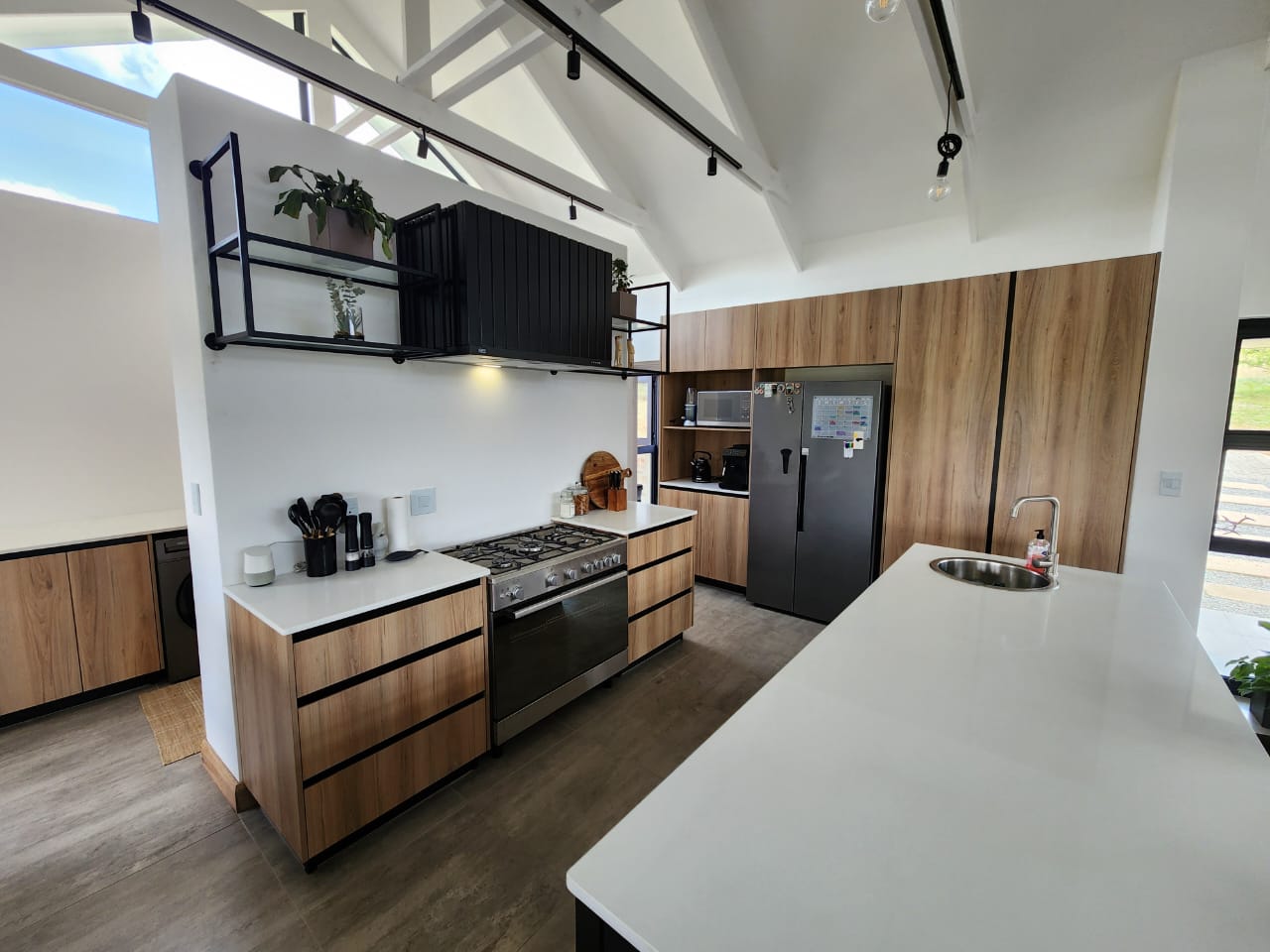
A Contemporary Oakmont Kitchen Approach
In recent Oakmont projects, open-plan kitchen layouts are designed with a focus on proportion, flow and material consistency.
Cabinetry is integrated seamlessly into the surrounding space, with careful attention given to layout, finishes and detailing.
These kitchens are tailored to the architecture of the home, ensuring that the space feels cohesive, functional and visually refined.
For homeowners exploring similar solutions, luxury kitchens in Johannesburg are increasingly being designed as custom installations that integrate seamlessly into open-plan living environments.
Final Thoughts
Open-plan kitchen layouts represent a shift toward more integrated and intentional interior design.
By focusing on spatial planning, material continuity and subtle zoning, these layouts allow the kitchen to function as both a practical workspace and a central feature within the home.
As modern living continues to evolve, open-plan kitchens will remain a defining element of contemporary design.