
Oakmont Kitchens & Interiors, Johannesburg
In contemporary interiors, floating TV units have become a defining feature of modern living spaces. By lifting cabinetry off the floor, these installations introduce a sense of lightness and visual balance that aligns with clean, architectural design principles.
Rather than appearing as standalone furniture, floating TV units are designed to integrate with the surrounding wall, allowing the television to form part of a broader composition.
Design publications such as Dezeen frequently highlight how minimal joinery and carefully considered proportions can transform simple cabinetry into architectural elements within the home.
In many homes, floating TV units are developed alongside other cabinetry installations so that materials and finishes remain consistent throughout the interior.
For example, many luxury kitchens in Bryanston incorporate similar floating or minimal cabinetry elements, creating continuity between living spaces and kitchen design.
Minimal Floating TV Units
Minimal floating units focus on simplicity and proportion. These designs typically consist of clean-lined cabinetry with no visible handles, allowing the form of the unit to remain uninterrupted.
The absence of visual clutter allows the television wall to feel calm and considered, particularly in open-plan interiors where multiple spaces flow into one another.
This approach works particularly well in homes where restraint and subtle detailing define the overall aesthetic.
Floating Units with Integrated Lighting
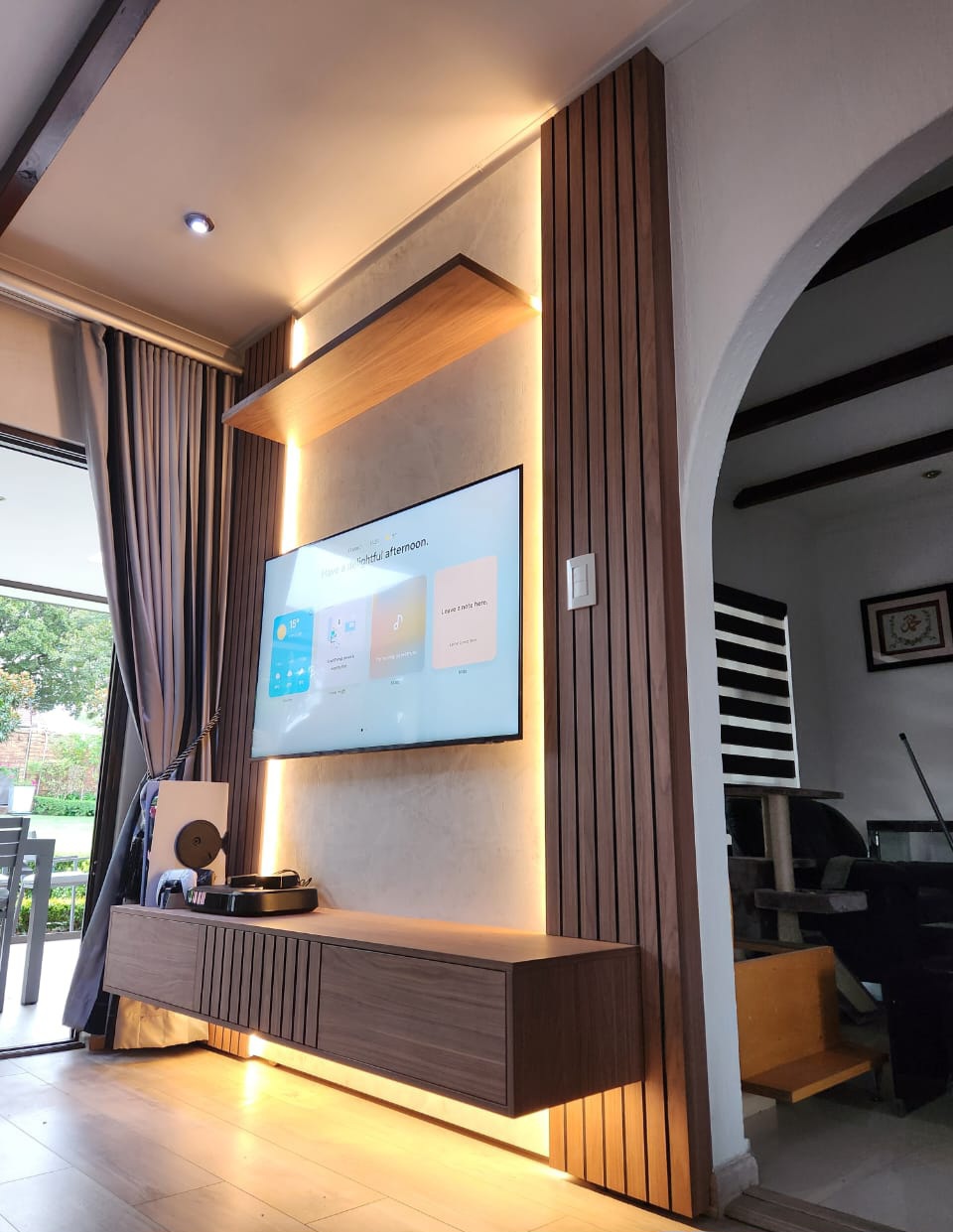
One of the defining features of floating TV units is the ability to incorporate subtle lighting beneath the cabinetry.
This creates a soft glow that enhances the perception of the unit “floating” within the space while also adding depth to the overall composition.
Lighting can be used to highlight textures, soften hard edges and create a more ambient atmosphere within the living area.
Design platforms such as Dwell often showcase how lighting is used to elevate simple cabinetry into a more refined architectural feature.
Wall-to-Wall Floating Designs
In larger living spaces, floating TV units can extend across the full width of the wall.
This creates a strong horizontal line that anchors the room while maintaining a light visual presence due to the floating installation.
These designs often combine open shelving, closed storage and panel elements to create a balanced composition that spans the entire wall.
Similar principles are often applied when designing built-in cupboards in Johannesburg, where cabinetry is tailored to the proportions of the room and integrated into the architecture.
Floating Units with Concealed Storage
While floating TV units are often associated with minimal design, they can still offer significant storage capacity.
Cabinetry can be designed to conceal media equipment, cabling and additional storage behind clean-lined fronts, maintaining a refined and uncluttered appearance.
This balance between functionality and aesthetics is central to modern cabinetry design, where practical requirements are integrated seamlessly into the visual composition of the space.
These same principles are commonly seen in kitchen cupboards in Johannesburg, where storage is designed to remain visually unobtrusive while still highly functional.
Material-Led Floating Designs
Material selection plays a key role in defining the character of a floating TV unit.
Timber grain finishes can introduce warmth, while matte surfaces create a more subdued and contemporary feel. Stone elements or textured panels can be used to add contrast and visual depth.
The success of these installations often lies in the balance between materials, ensuring that no single element overwhelms the composition.
Many designers reference decorative boards supplied by companies such as PG Bison when selecting finishes for cabinetry.
Floating TV Units in Contemporary Homes
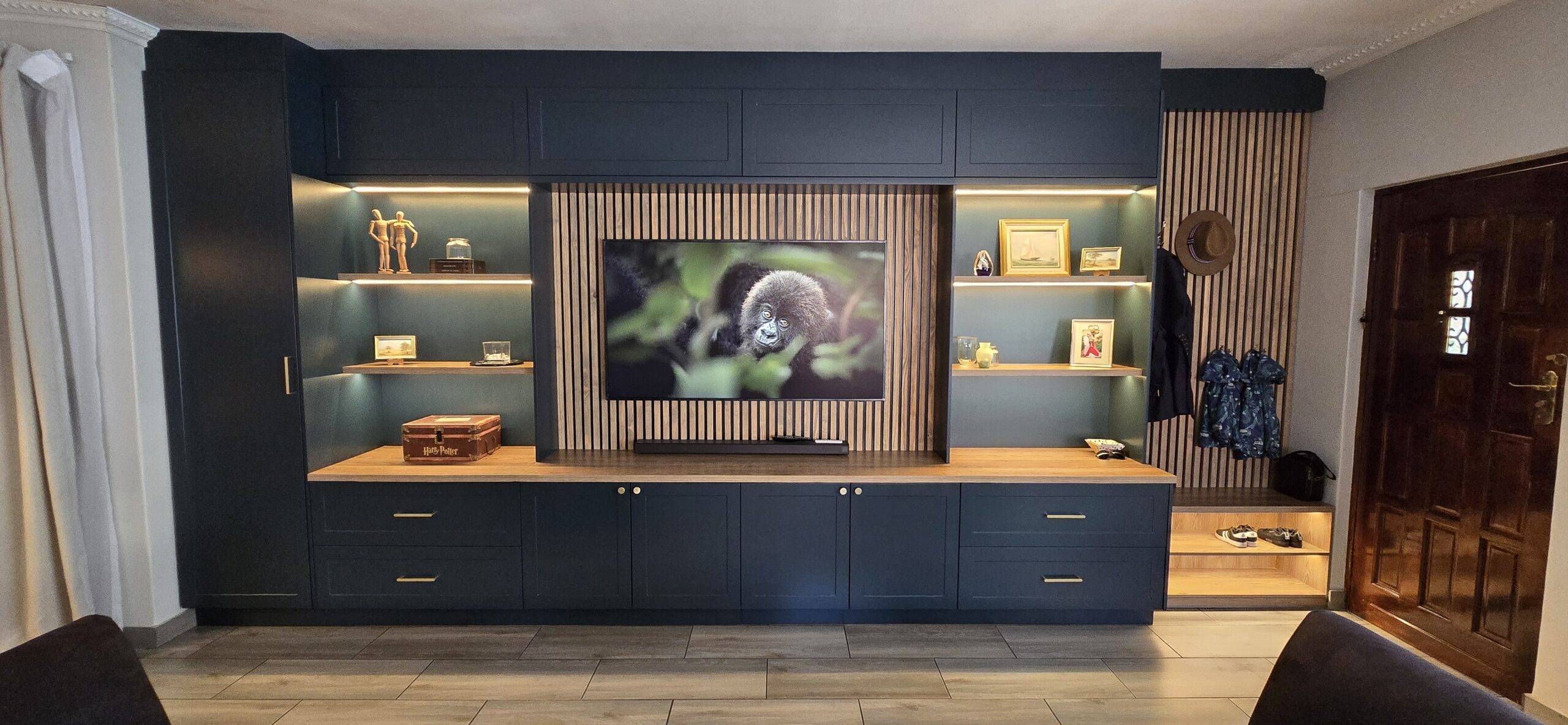
Floating TV units are increasingly being used in contemporary homes as part of a broader design approach where cabinetry is treated as an architectural element.
By integrating these units into the wall and coordinating them with other cabinetry throughout the home, designers are able to create interiors that feel cohesive and intentional.
For homeowners exploring similar solutions, TV units and entertainment walls in Johannesburg are often designed as custom installations tailored to the proportions and layout of each space.
Final Thoughts
Floating TV units represent a shift towards more refined and considered interior design. By removing visual weight and integrating cabinetry into the architecture of the space, these installations allow living areas to feel lighter, more open and carefully composed.
Through thoughtful design, material selection and integration, floating units continue to define the direction of modern entertainment wall design.