Oakmont Kitchens & Interiors, Johannesburg
When comparing good vs great kitchen designers in Johannesburg, the difference is not always obvious at the beginning.
Both may produce a layout.
Both may suggest finishes.
Both may present a kitchen that looks complete.
The difference sits deeper than that.
It shows in how the space moves.
How storage is resolved.
How materials meet.
How the kitchen feels after the first few weeks of use.
A good kitchen designer can make a kitchen look right.
A great one understands why it works.
A Good Kitchen Designer Fills the Space
A good kitchen designer will usually begin with the room.
The wall lengths.
The windows.
The appliances.
The available space.
That matters.
A kitchen has to fit.
But fitting is only the beginning.
A kitchen can fit perfectly on paper and still feel uncomfortable in daily use. It can have the right number of cupboards, the right island size, the right finishes — and still feel like something has not quite settled.
That is usually where the difference begins.
A good kitchen designer fills the space.
A great kitchen designer reads it.
A Great Kitchen Designer Understands Movement
A kitchen is not a static room.
It is a space of repeated movement.
Fridge to prep area.
Prep area to hob.
Sink to bin.
Storage to counter.
Counter to dining.
These movements happen without much thought.
Until they are interrupted.
A bin in the wrong place.
A drawer that blocks a walkway.
An island that looks beautiful but interrupts the natural rhythm of the room.
These are not dramatic mistakes.
They are small frictions.
And small frictions repeat.
A great kitchen designer understands that layout is not only about where things go. It is about how the person using the kitchen moves between them.
For a broader look at how layout affects the overall kitchen experience, see our guide to best kitchen layouts in Johannesburg.
Planning a kitchen and unsure where to begin?
Start with the design process before committing to finishes, materials, or pricing.
Good Design Solves the Obvious Problems
Most kitchens have obvious requirements.
Storage.
Counter space.
Appliance placement.
A sink.
A hob.
A place to sit.
A good designer will usually solve these.
The kitchen will function.
The cupboards will open.
The appliances will fit.
The finishes will coordinate.
But great design goes further.
It solves the problems the client may not yet know to mention.
Where the school bags land.
Where the coffee machine should live.
Where the serving dishes go.
Where the prep work actually happens.
Where clutter will collect if it is not planned for.
The best kitchens are not only designed for how people imagine they will use the space.
They are designed for how people actually live.
The Difference Between Design and Decoration
This is where many kitchens lose their way.
Decoration is visible.
Colour.
Handles.
Stone.
Lighting.
Feature panels.
Design is quieter.
Proportion.
Alignment.
Workflow.
Storage logic.
Material transitions.
Decoration can make a kitchen attractive.
Design makes it hold together.
A good kitchen designer may focus on the visible selections.
A great kitchen designer understands what those selections are doing inside the space.
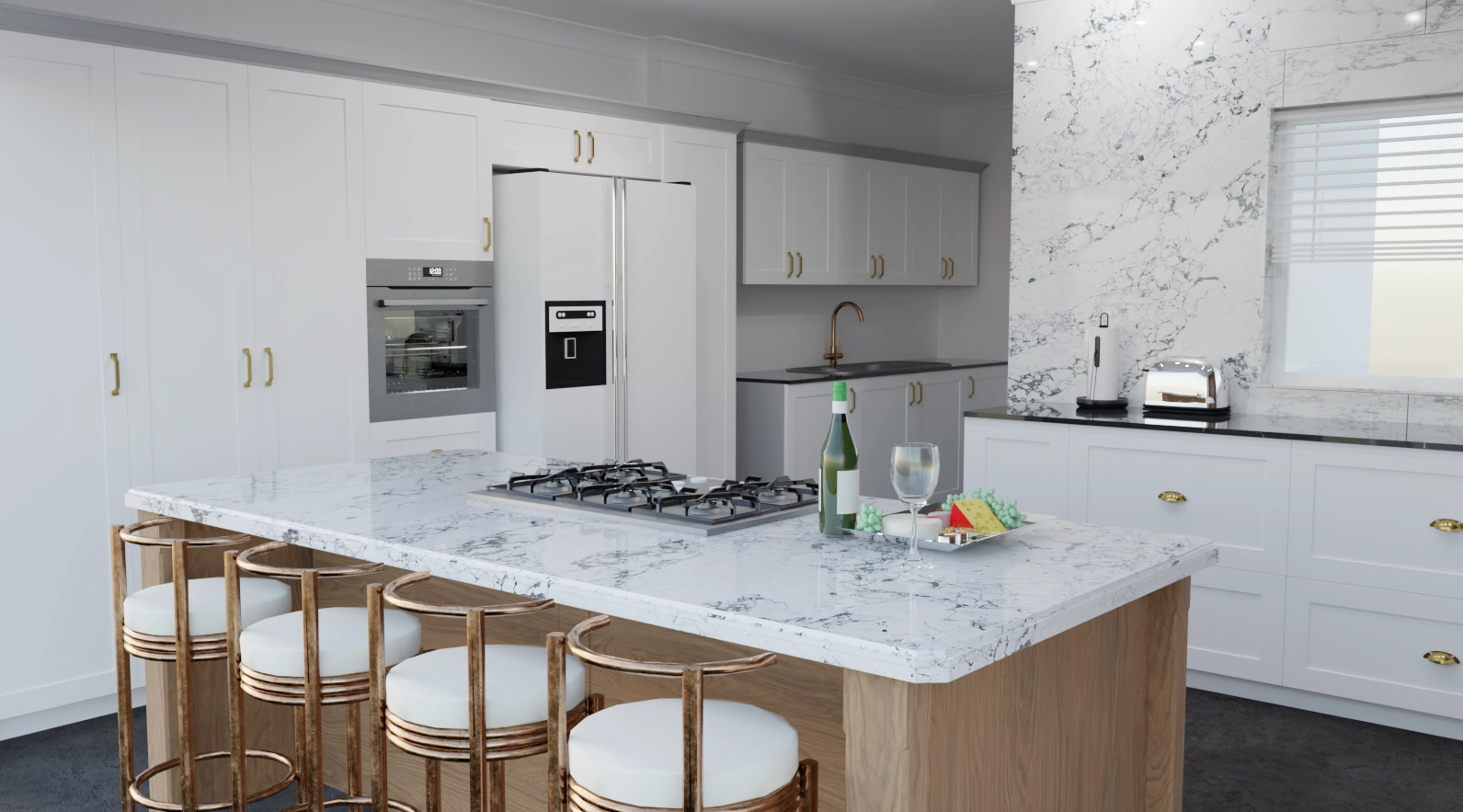
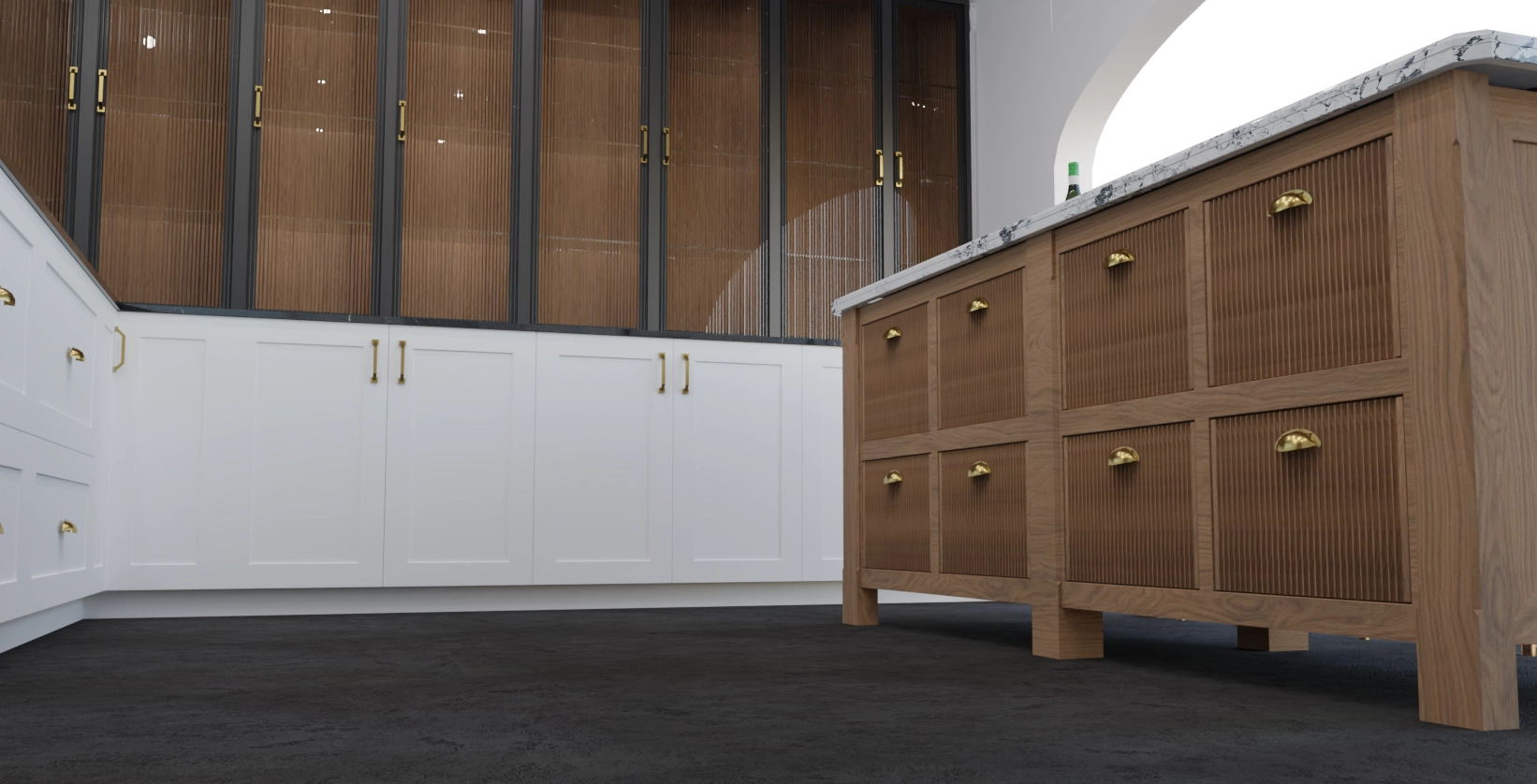
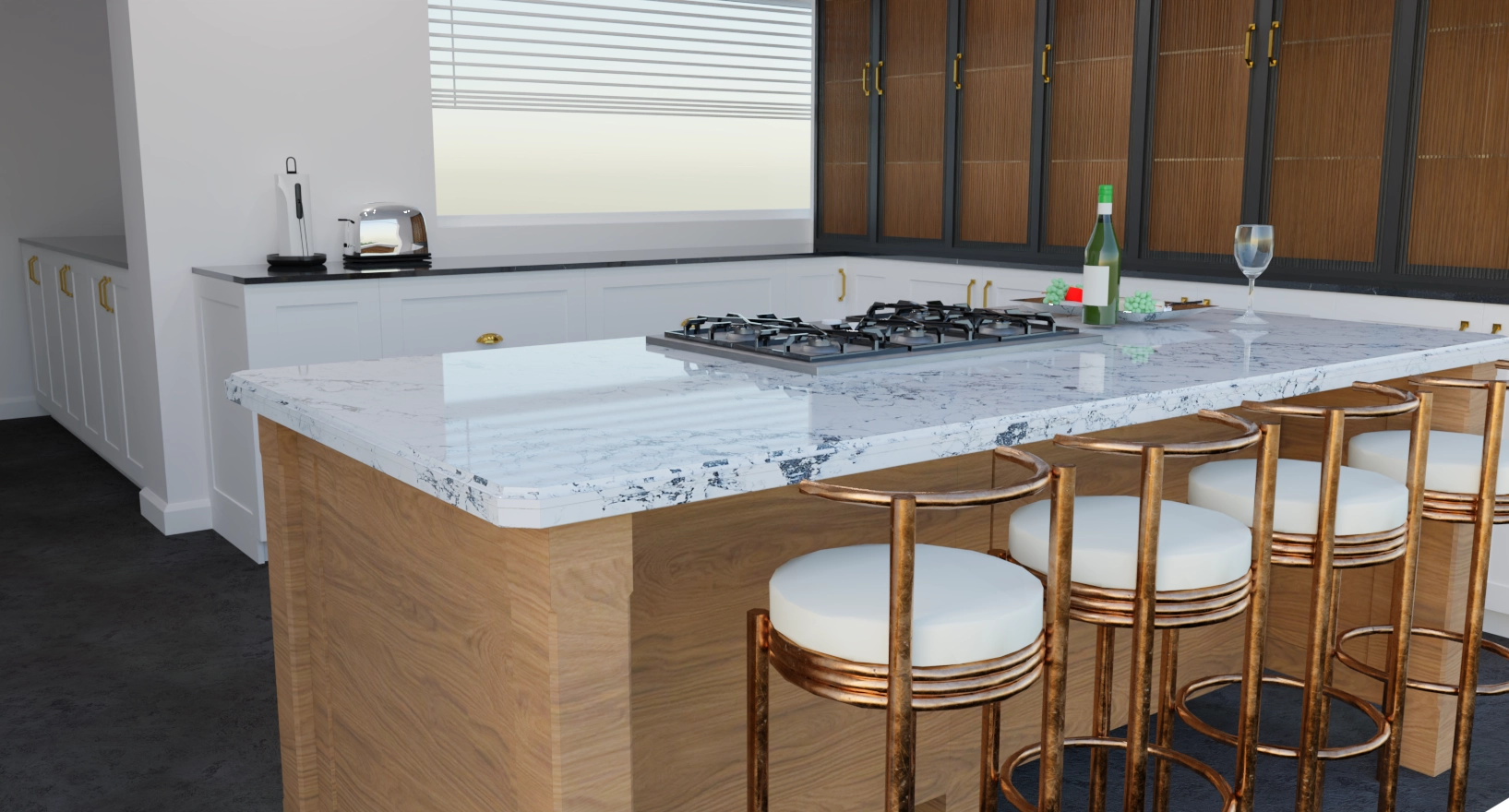
A timber finish may warm the room.
A darker frame may give structure.
A fluted detail may add rhythm.
A stone surface may carry visual weight.
None of these decisions should feel separate.
They should belong to the same thought.
For a broader understanding of how design-led kitchens are approached, explore our kitchens in Johannesburg.
Material Choices Are Not Just Aesthetic
Materials are often treated as a visual decision.
What colour.
What texture.
What finish.
But in kitchen design, materials carry more responsibility than that.
They need to work with light.
They need to handle daily use.
They need to sit correctly against other materials.
A finish that looks calm in a showroom may feel flat in a darker room. A bold texture may overwhelm a small space. A timber tone may feel warm in one home and too heavy in another.
The material is never alone.
It belongs to the room.
A great kitchen designer understands that material selection is not only about preference. It is about context.
Manufacturers such as PG Bison provide board finishes used widely in South African cabinetry, making material consistency and selection an important part of the design conversation.
Hardware Is Part of the Design
Hardware is often discussed too late.
It should not be.
Hinges.
Drawer runners.
Lift systems.
Internal mechanisms.
These details affect the way the kitchen feels every day.
A drawer that glides properly changes the experience of the space. A hinge that stays aligned over time changes how the kitchen ages. A bin system placed correctly changes how naturally the kitchen functions.
Good designers specify hardware.
Great designers understand how it changes use.
Premium hardware systems from brands such as Grass are designed around long-term movement and repeated daily use, which makes hardware selection part of the design process rather than a technical afterthought.
A Great Kitchen Designer Knows When to Stop
This may be one of the most overlooked skills in kitchen design.
Knowing what to add is easy.
Another material.
Another feature.
Another open shelf.
Another lighting detail.
Knowing what to remove requires more confidence.
Great kitchen design often comes from restraint.
A strong island does not need every surface to compete with it.
A textured cabinet detail does not need a second feature fighting for attention.
A clean wall of cabinetry can sometimes do more than open shelving ever could.
The best kitchens do not try to impress from every angle.
They allow the right moments to carry the space.
That is difficult to do if the designer is only chasing visual impact.
It requires control.
Budget Is Also a Design Decision
Cost is not separate from design.
It is shaped by it.
A kitchen becomes more expensive through:
- layout complexity
- material selection
- hardware specification
- internal storage systems
- detailing
- installation requirements
But cost can also rise when decisions are not controlled.
Too many finishes.
Unnecessary complexity.
Poor planning.
Late changes.
A great kitchen designer helps direct the investment.
Not everything needs to be premium.
But the important things need to be right.
For a clearer understanding of how material and specification choices influence cost, see our guide to kitchen renovation costs in Johannesburg.
Planning a kitchen and unsure where to begin?
Start with the design process before committing to finishes, materials, or pricing.
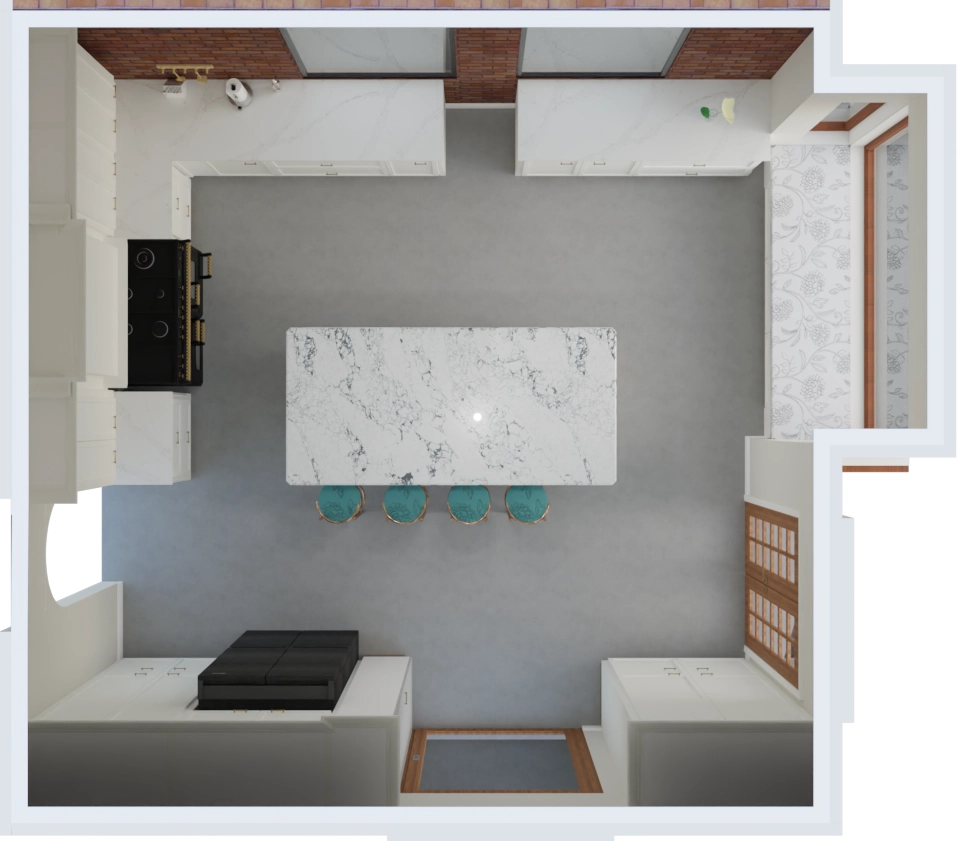
Good Designers Ask What You Want
Great designers listen for what matters.
There is a difference.
Most clients can describe what they like.
Fewer can immediately explain how they live.
They may know they want an island.
But not whether the island should be for prep, seating, cooking, storage, or all of it.
They may know they want more cupboards.
But not which storage zones are actually failing.
They may know the kitchen feels dated.
But not whether the real issue is layout, lighting, material fatigue, or poor flow.
A great kitchen designer asks better questions.
Not to complicate the process.
To simplify the outcome.
The Drawing Is Not the Design
A kitchen drawing is important.
It gives shape to the idea.
But the drawing itself is not the design.
The design sits in the decisions behind the drawing.
Why the tall units are placed there.
Why the island is that size.
Why the sink sits where it does.
Why the drawers are grouped in that way.
Why one wall is kept clean and another carries detail.
Without that thinking, drawings become decoration with dimensions.
A great kitchen designer does not simply show what the kitchen will look like.
They understand what each decision is doing.
A Great Designer Thinks Beyond the Kitchen
Modern kitchens rarely sit alone.
They connect to dining rooms.
Living spaces.
Sculleries.
Passages.
Outdoor areas.
This is especially true in Johannesburg homes where open-plan living is common and the kitchen often forms part of the main social space.
The kitchen has to work as cabinetry.
But it also has to work as part of the interior.
A great designer understands this relationship.
The kitchen should not feel like it was placed into the home.
It should feel like it belongs there.
For clients planning a full design-led kitchen process, our kitchen designers in Johannesburg page explains how Oakmont approaches kitchen design, layout, and material direction.
The Process Should Create Clarity
A good design process should not make the client feel more uncertain.
It should steadily reduce confusion.
At the beginning, there may be many ideas.
Images.
References.
Preferences.
Possibilities.
Over time, those should narrow.
The layout should become clearer.
The material direction should become calmer.
The cost should begin to make sense.
The decisions should feel connected.
If the process creates more noise, something is wrong.
A great kitchen designer helps the client move from inspiration to decision.
Without rushing.
Without overwhelming.
What to Watch Out For
There are certain signs that a kitchen design process may not be strong enough.
A quote arrives before the design is properly understood.
Materials are discussed before layout is resolved.
The designer agrees too quickly without questioning the space.
The plan looks good, but the workflow has not been explained.
The focus is placed almost entirely on price.
None of these automatically mean the outcome will fail.
But they are worth noticing.
Good kitchen design requires thought before commitment.
Once production begins, every unclear decision becomes more expensive to fix.
Good vs Great Kitchen Designers in Johannesburg
The difference between good vs great kitchen designers in Johannesburg is not always about talent.
Sometimes it is about depth.
A good designer can create something attractive.
A great designer creates something that holds up under use.
A good designer responds to the brief.
A great designer understands what the brief is trying to solve.
A good designer helps choose finishes.
A great designer knows where those finishes should be quiet, where they should speak, and where they should not be used at all.
That is the difference.
Not drama.
Not excess.
Just better decisions, made earlier.
External Perspective on Kitchen Planning
Good kitchen design is not only a local conversation. International design resources often reinforce the same principles: layout, function, materiality, and clarity all matter before visual styling.
Architectural Digest regularly explores kitchen design through the lens of proportion, material use, and interior context.
The Kitchen Specialists Association also provides South African consumers with guidance around kitchen companies, expectations, and industry practice.
Final Thoughts
A great kitchen does not usually announce itself all at once.
It settles into the home.
In the way the drawers open.
In the way the island holds the room.
In the way storage appears exactly where it should.
That is the work of design.
Not just making the kitchen look complete.
Making it feel resolved.