

Oakmont Kitchens & Interiors, Johannesburg
In contemporary homes, the shift toward open-plan living has redefined the role of the kitchen. Rather than existing as a separate room, the kitchen now forms part of a continuous living environment, connecting cooking, dining and social spaces into a unified interior.
Luxury kitchen design within open-plan layouts focuses on balance, proportion and material continuity. The kitchen must function efficiently while also contributing to the overall architectural composition of the home.
Design publications such as Dezeen frequently explore how open-plan kitchens are designed to integrate seamlessly into modern interiors through careful spatial planning and restrained material palettes.
In many projects, open-plan kitchens are developed alongside other joinery elements to ensure that finishes and detailing remain consistent across the space.
For example, many luxury kitchens in Bryanston are designed as part of larger open-plan living environments where cabinetry extends into dining and entertainment areas.
The Role of Layout in Open-Plan Design
The success of an open-plan kitchen lies in its layout.
Rather than simply placing cabinetry within a space, the layout must consider movement, sightlines and how different areas interact with one another.
Key elements such as islands, walkways and appliance positioning are carefully planned to ensure that the kitchen remains functional without disrupting the flow of the home.
This approach reflects a broader design philosophy where spatial planning becomes just as important as material selection.

Kitchen Islands as Central Features
In open-plan kitchens, the island often becomes the focal point of the entire space.
It acts as a bridge between cooking and living areas, providing a place for food preparation, casual dining and social interaction.
Luxury kitchen islands are often designed with generous proportions, incorporating features such as waterfall stone surfaces, integrated seating and concealed storage.
The positioning of the island plays a critical role in maintaining clear circulation paths while anchoring the overall layout.
Material Continuity Across Spaces
One of the defining characteristics of a successful open-plan kitchen is the continuity of materials.
Rather than introducing abrupt changes, materials are carried across different areas of the home to create a cohesive interior.
Timber finishes, stone surfaces and matte cabinetry are often repeated in adjacent spaces such as living rooms or built-in joinery.
This is commonly seen in built-in cupboards in Johannesburg, where cabinetry is designed to align with the finishes used throughout the home.
Zoning Without Walls
Open-plan design requires subtle methods of defining different areas within the space.
Instead of physical walls, zoning is achieved through layout, lighting and material changes.
For example:
• kitchen islands can define the cooking zone
• pendant lighting can highlight dining areas
• changes in cabinetry or finishes can separate functions
These techniques allow the space to feel open while still maintaining a sense of structure and organisation.
Integrated Storage and Clean Lines
In open-plan kitchens, visual clarity is essential.
Storage solutions are designed to conceal appliances, reduce clutter and maintain a clean, uninterrupted appearance.
Handleless cabinetry, integrated appliances and concealed storage systems allow the kitchen to blend seamlessly into the surrounding space.
High-quality hardware systems from manufacturers such as BLUM are often used to ensure durability and smooth operation.
This same level of refinement is often applied in kitchen cupboards in Johannesburg, where storage is designed to remain functional while visually unobtrusive.
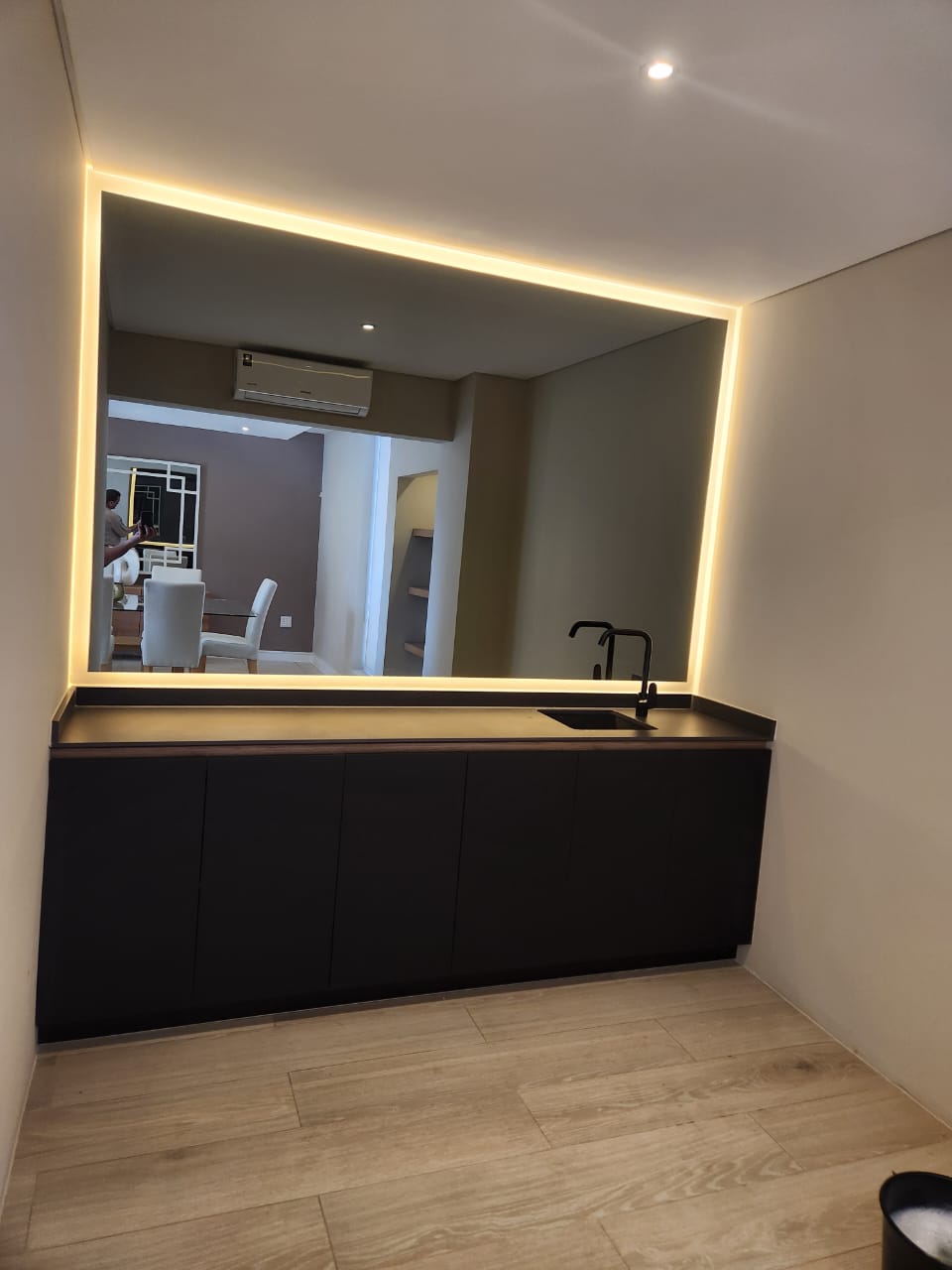
A Contemporary Open-Plan Oakmont Kitchen
Recent Oakmont projects reflect a focus on integrating kitchen design into the broader living environment.
The use of consistent materials, carefully considered layouts and subtle lighting allows the kitchen to become part of a cohesive interior rather than a standalone feature.
Timber grain finishes combined with stone surfaces and soft lighting create depth while maintaining a calm and refined atmosphere.
For homeowners exploring similar solutions, luxury kitchens in Johannesburg are increasingly designed as custom installations tailored to open-plan living.
Internal link > Luxury Kitchens Johannesburg
Final Thoughts
Open-plan luxury kitchens represent a shift toward more integrated and intentional interior design.
By focusing on layout, material continuity and subtle zoning, these spaces allow the kitchen to function as both a practical workspace and a central feature within the home.
As contemporary design continues to evolve, open-plan kitchens will remain a defining element of modern living environments.