
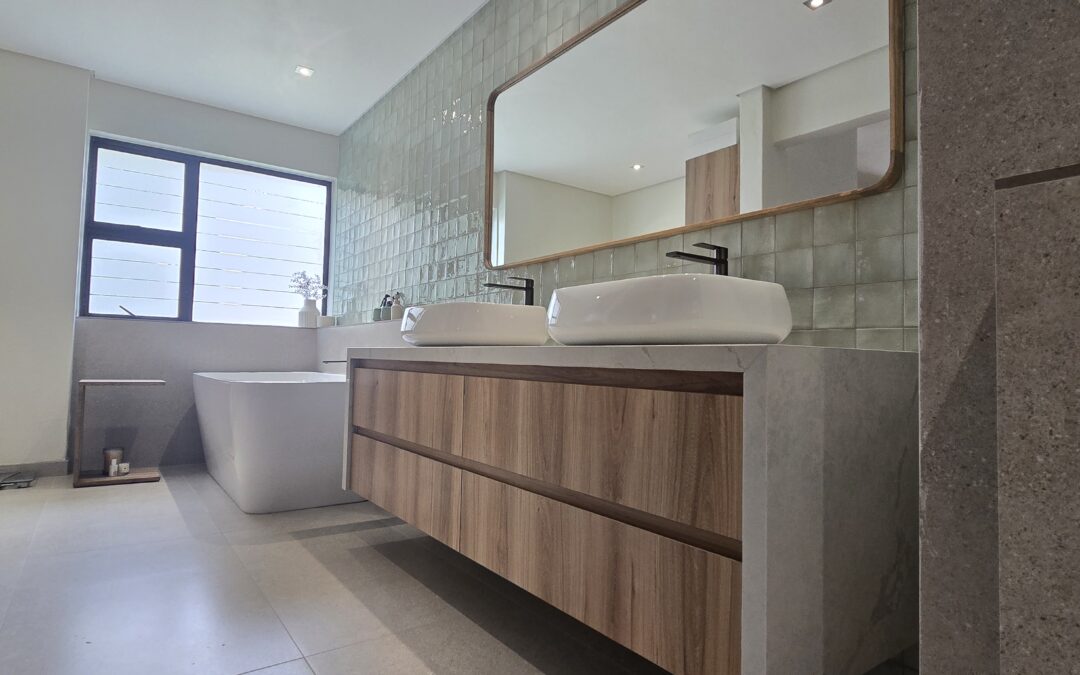
Why Bathroom Vanity Design Matters More Than You Think
Oakmont Kitchens & Interiors, Johannesburg
Bathroom vanity design in Johannesburg homes is often reduced to surface decisions — finishes, colours, and storage volume. Yet in well-considered interiors, the vanity plays a far more architectural role.
It anchors the bathroom visually, shapes circulation, and sets the tone for how the space is experienced daily. When designed with intention, a vanity becomes part of the room’s structure rather than an isolated object.
Design publications such as Dwellfrequently highlight how restraint and proportion in bathroom joinery contribute to calm, enduring spaces.
Understanding Bathroom Vanity Design in Johannesburg Homes
Every bathroom presents its own constraints — spatial, functional, and environmental. Ceiling heights, natural light, ventilation, and daily use patterns all influence how a vanity should be shaped.
A considered approach to bathroom vanity design Johannesburg begins with understanding how the space functions as a whole. This allows the joinery to respond naturally to the architecture, rather than compete with it.
For homeowners and designers seeking long-term clarity and durability, professionally manufactured bathroom vanities Johannesburg offer a level of resolution that standard retail solutions rarely achieve.
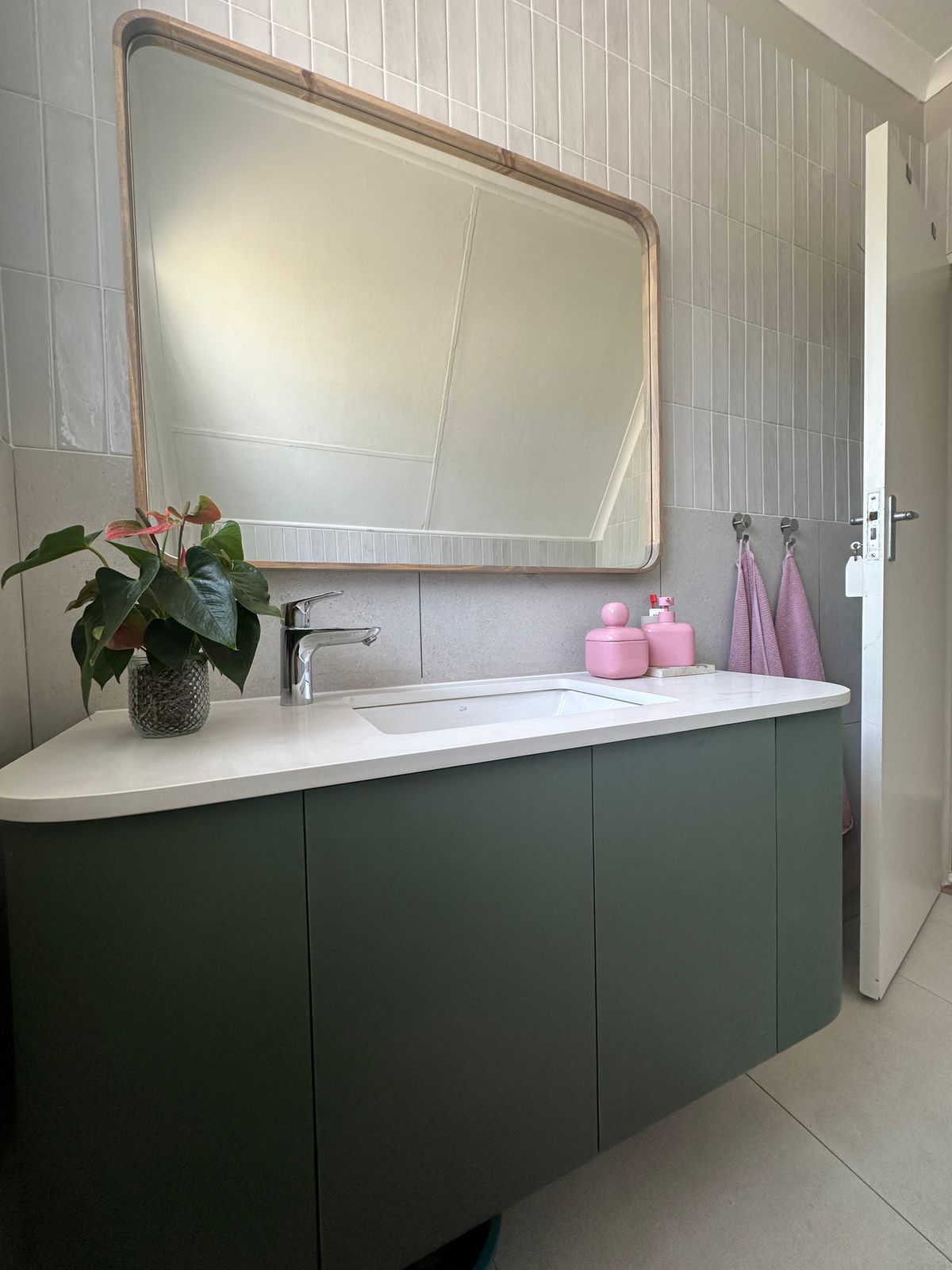
Floating vs Floor-Mounted Vanities
One of the earliest decisions in vanity design is whether the unit should float or sit on the floor. Each approach carries both visual and practical implications.
Floating vanities
-
Create a sense of lightness
-
Emphasise floor space
-
Work well in compact bathrooms
-
Require precise wall preparation
Floor-mounted vanities
-
Offer greater storage capacity
-
Provide visual weight in larger bathrooms
-
Integrate well with traditional layouts
The decision is less about trend and more about proportion, circulation, and how the bathroom is used daily.
Material Selection and Moisture Considerations
Bathrooms demand materials that can withstand humidity without sacrificing visual restraint. Finishes should feel resolved, not defensive.
Design-led vanities often favour:
-
Moisture-resistant boards
-
Soft matt or satin finishes
-
Subtle wood textures
-
Tonal colour palettes
This material language mirrors what is often seen in imported premium kitchens, where surface continuity and long-term durability are prioritised over ornamentation.
Manufacturers such as PG Bison publish detailed specifications around moisture-resistant boards suitable for bathroom environments.
Internal Storage That Supports Daily Use
Behind the facade, a vanity’s internal layout determines how well it supports daily routines. Thoughtful drawer configuration reduces clutter and improves usability.
Common internal elements include:
-
Deep drawers for toiletries
-
Shallow drawers for grooming items
-
Concealed compartments for electrical points
-
Open sections for towels or baskets
High-quality hardware systems from manufacturers such as Blumand Grassensure smooth operation and longevity in high-use environments.
Vanities as Part of a Broader Joinery Language
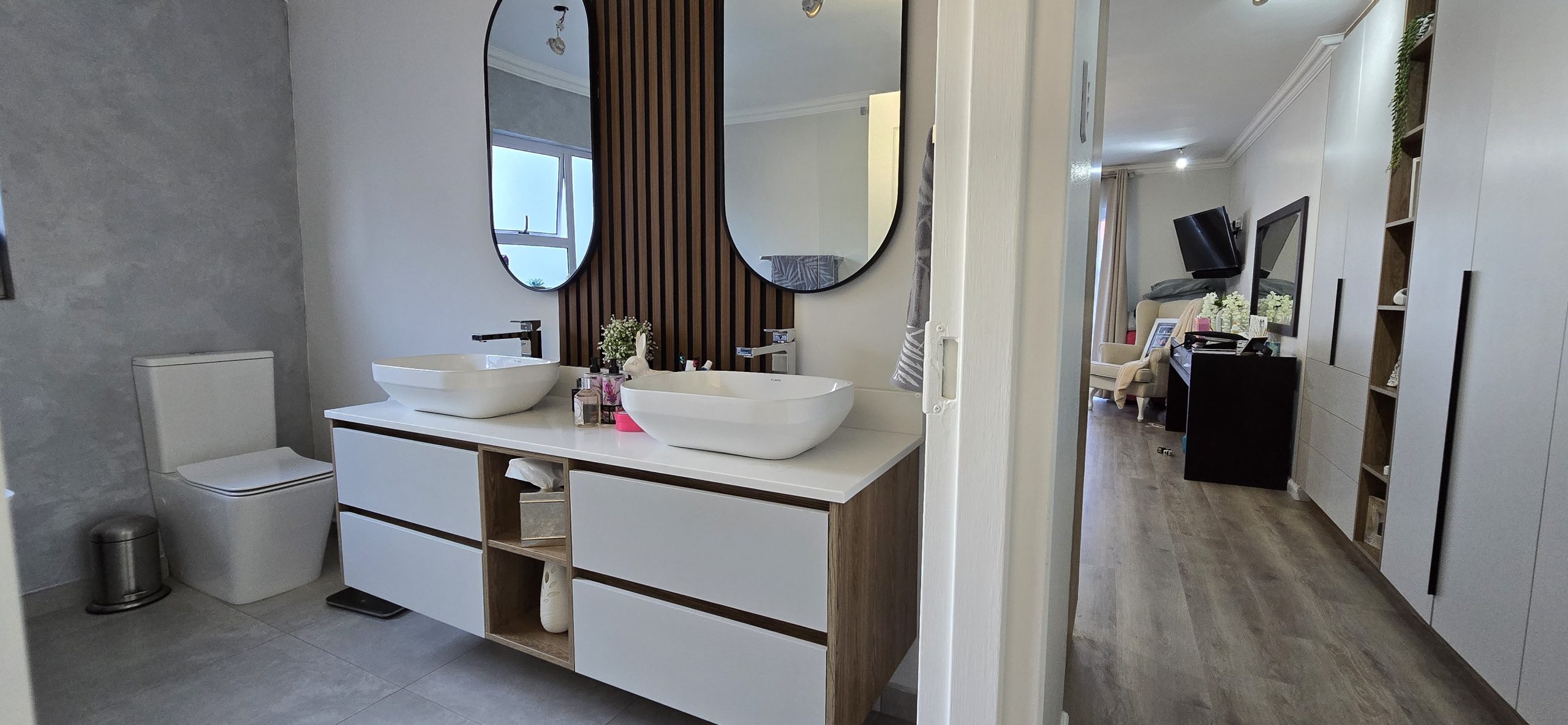
In well-resolved interiors, bathroom vanities rarely exist in isolation. Their finishes and proportions often echo adjacent joinery — from wardrobes to bedroom storage.
This continuity allows bathrooms to feel connected to the rest of the home rather than treated as purely functional zones. It also reinforces a consistent material language throughout the interior.
Final Thought
A bathroom vanity should feel settled within its space. When proportion, material, and function are carefully aligned, the joinery fades into the background, allowing the bathroom itself to breathe.
Thoughtful bathroom vanity design in Johannesburg homes prioritises clarity and restraint, ensuring storage supports daily life without visual interruption.